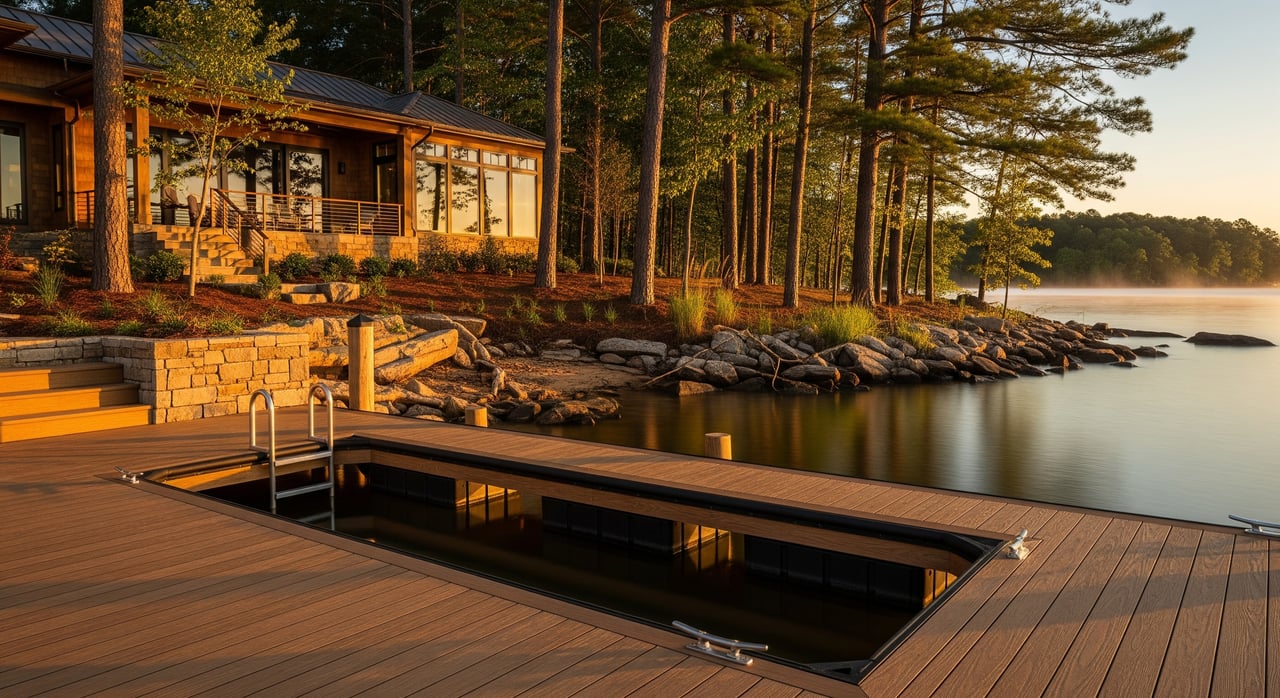
Are you eyeing a waterfront lot in Denver’s 28037 and wondering if you can build a private dock on Lake Norman? You are not alone. Many buyers assume that “waterfront” means “dockable,” but the rules and site conditions can tell a different story. In this guide, you’ll learn how to tell the difference between dockable and non-dockable lots, what agencies are involved, and the steps to confirm dock potential before you buy. Let’s dive in.
What “dockable” really means
A lot is dockable when you have deeded riparian rights and can obtain the required permits to build a private dock that meets Lake Norman’s rules. A lot is non-dockable when those rights are absent or when regulations and site factors prevent a compliant design.
On Lake Norman, the primary shoreline regulator is Duke Energy’s Lake Services through the Shoreline Management Program. You may also need local, state, and federal reviews depending on the scope of work, especially for dredging or shoreline stabilization.
Who regulates docks in 28037
- Duke Energy Lake Services and the Shoreline Management Program govern docks, boatlifts, and shoreline structures on Lake Norman.
- Lincoln County handles building permits, zoning, floodplain checks, and septic setbacks through Planning, Inspections, and the Health Department.
- North Carolina DEQ can require 401 Water Quality Certification and other approvals for dredging or water quality impacts.
- U.S. Army Corps of Engineers may review projects that affect navigable waters or wetlands.
- HOAs and recorded covenants can add rules on design, location, or materials, separate from agency permits.
- Utility and access easements, plus your deeded riparian boundaries, can determine if you can build a private dock at all.
The rules that shape dockability
Cove width and side setbacks
Shoreline programs often restrict new docks in narrow coves to protect navigation and neighbor access. Duke evaluates the opening of a cove and may deny or limit docks if the mouth is too narrow. Side setbacks from riparian boundaries also apply so your dock does not block a neighbor’s access. Numeric thresholds vary by plan update, so always confirm the current Lake Norman rules with Duke.
Water depth and dredging
Adequate depth near shore reduces dock length and cost. Shallow shelves push your walkway farther out and can lead to dredging requests. Dredging is heavily regulated, can be expensive, and is not guaranteed. If your access to navigable water depends on dredging, plan for more time, more reviews, and possible denial.
Neighbor docks, channels, and safety
Distance from existing docks, marinas, and marked navigation channels matters. Duke evaluates crowding, boat traffic, and safe ingress and egress. If adjacent docks already occupy the best water, your placement options shrink.
Shoreline stabilization and riprap
Erosion control measures like riprap and seawalls often require separate authorization. These projects can trigger county, state, or federal reviews in addition to Duke’s permit.
Lot factors that make or break it
- Legal status: Check your deed for explicit riparian rights. Some “waterfront” parcels do not carry private dock rights or hold them in common.
- Easements and access strips: Utility or public access easements can cut off your dock zone.
- Lot shape and shoreline: Straight, wide frontage on an open cove is favorable. Tip lots at the back of narrow coves are higher risk.
- Cove geometry: Wide cove openings tend to permit docks more readily than tight, winding coves.
- Bathymetry: Quick depth near shore is ideal. Long shallow shelves increase cost and permitting risk.
- Construction access: Steep slopes or limited staging areas can drive up time and expense.
- Environmental constraints: Wetlands, aquatic vegetation, or sensitive habitats can limit or block permits.
- Onsite systems: Septic locations and county setbacks can influence where a dock and walkway can logically go.
Real Denver scenarios you may encounter
Likely dockable: deep lot on an open cove
The shoreline faces a broad inlet that opens widely to the main channel. Depth is good within a short walkway. There are no utility easements at the shore and no conflicts with neighbors. Outcome: strong chance of a Duke permit, subject to current rules and any HOA review.
Possibly non-dockable: narrow cove tip with a shallow shelf
A parcel sits at the very back of a tight, winding cove with limited opening and long shallow water. Neighbor docks are close. Outcome: higher risk of denial or significant changes. Dredging would be complex and may not be approved.
Conditional: peninsula or point lot
A point lot wraps around an irregular shoreline. One side has good depth, the other is shallow. Outcome: often workable if the dock is sited on the deeper side and meets lateral setbacks. Expect a tailored design.
Legally non-dockable: no recorded riparian right
A lot looks waterfront but the deed reserves riparian rights to another party or holds them in common. Outcome: private dock not allowed unless rights are acquired, which is uncommon and uncertain.
How to self-check a 28037 lot
- Confirm riparian rights. Review the recorded deed and plat for private dock rights, shared rights, or restrictions. Order a title commitment if you are serious.
- Get a boundary and riparian survey. A licensed surveyor can mark lateral lines on the water. Do not rely on fences, pins, or guesswork.
- Measure cove opening. Use a survey and aerial imagery to estimate the straight-line width where the cove meets the main lake. Duke will apply its own protocol, but a field check helps you gauge risk.
- Check water depth. Have a marine contractor or surveyor take basic sonar soundings. Depth informs dock length, placement, and dredging needs.
- Map neighbors and channels. Identify adjacent docks, marinas, and any channel markers that could limit placement.
- Look for easements and encumbrances. Powerline corridors, public access, or recorded easements can preclude a dock.
- Discuss with Duke early. Request the current Lake Norman Shoreline Management Program, a feasibility discussion, and the application checklist.
- Coordinate with Lincoln County and agencies. Ask Planning, Inspections, and the Health Department about septic, setbacks, floodplain, and grading. Consult NCDEQ and the U.S. Army Corps if dredging or wetlands are in play.
What it costs to permit and build
- Permit fees: Typically modest for simple dock permits. Costs increase when dredging or multiple agency reviews are involved.
- Surveys and design: Ranges from a few hundred to several thousand dollars for boundary and riparian surveys, bathymetry, and engineered dock plans.
- Dock construction: Simple floating docks and lifts usually cost in the tens of thousands. Larger fixed or multi-slip systems can reach the mid to high five-figure range or more.
- Dredging and stabilization: Often the largest single line item, with additional mitigation or monitoring when required.
- Legal and title work: Variable, especially if you must clarify rights or boundaries.
A buyer’s due diligence checklist
- Title and deed: Order a title commitment. Verify riparian rights, covenants, and easements.
- Survey: Commission a current ALTA or boundary survey with riparian lines shown.
- Duke pre-application: Request a site-specific feasibility check and the latest Lake Norman SMP.
- Bathymetry: Have a marine professional run soundings and sketch a conceptual dock layout with costs.
- Agency coordination: Contact Lincoln County, NCDEQ, and the U.S. Army Corps if dredging or wetlands are suspected.
- HOA: Obtain covenants and any dock design or location rules, plus written guidance if available.
- Neighbor input: Ask adjacent riparian owners about existing docks and historical shoreline changes.
- Contract protection: Use a dockability and shoreline feasibility contingency with clear deliverables.
Key takeaways
- Do not assume waterfront equals dockable in Denver’s 28037. Rights, rules, and site conditions decide the outcome.
- Duke Energy’s Shoreline Management Program, along with county, state, and federal reviews, sets the framework. HOA rules and easements can add constraints.
- The most common deal breakers are lack of riparian rights, narrow cove openings, shallow shelves, encumbrances, and restrictive covenants.
- Early, documented due diligence reduces risk and helps you budget accurately.
Ready to evaluate a specific lot or prep a property for market? Reach out to Liz Miller for a private consultation. You will get seasoned guidance on Lake Norman shoreline rules, vendor introductions, and a clear plan for your goals.
FAQs
What does “dockable” mean for a Lake Norman lot in 28037?
- It means your deed includes riparian rights and the site can meet Duke Energy’s shoreline rules and other agency requirements so a private dock permit is achievable.
Who decides whether I can build a dock on my Denver property?
- Duke Energy authorizes docks on Lake Norman, while Lincoln County oversees on-shore work; NCDEQ and the U.S. Army Corps may be involved if dredging or wetlands are affected.
How do I know if my cove is too narrow for a dock?
- Measure the cove opening where it meets the main lake and ask Duke to confirm the current criteria, since thresholds and policies can change by plan update.
Do I need dredging to get dock access on a shallow lot?
- It depends on bathymetry. Dredging is heavily regulated, may be costly, and is not guaranteed, so consult a marine contractor and agencies early.
Can an HOA stop me from building a dock even if Duke approves?
- Yes. HOA covenants can restrict design, materials, or location and can require separate HOA approval in addition to agency permits.
What should I include in my purchase contract for a waterfront lot?
- Add a dockability and shoreline feasibility contingency that requires a survey with riparian lines, Duke feedback, and a preliminary dock cost estimate before you proceed.